Hope

This time of year always feels turbulent. The transition from winter to spring doesn’t seem to happen in a gentle cascade or a glorious burst of green, but it swings quite violently between the two seasons. A day of sun and warmth reminds me of the vibrancy of spring. The promise of summer is almost ripe in the scent of cut grass and delicate blossoms. I have been content in the dark embrace of winter but a switch suddenly flicks in my body, a seasonal thermostat that now longs for days of sun-warmed skin and bare foot on damp grass. 
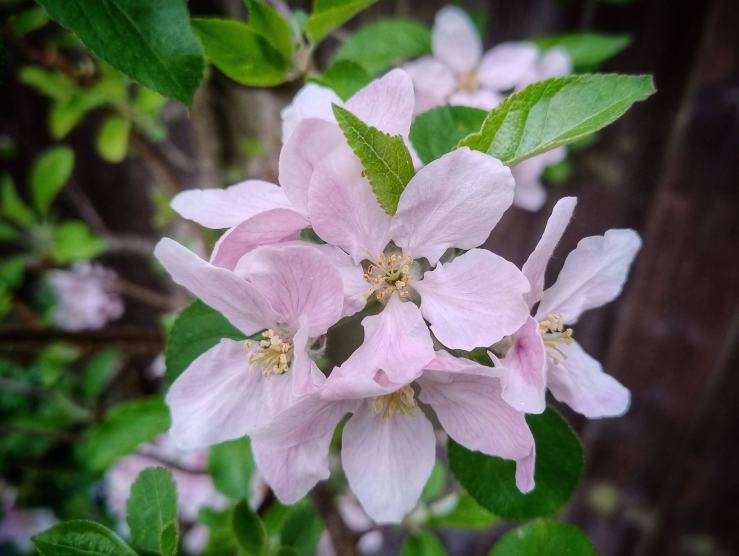
The next day brings storms and minus temperatures. And this goes on for a month or more. Every year I repeat with silent amusement “ne’er cast a clout ‘til May is out”, while my body protests at the wild fluctuations in temperature. In March, I find this turbulence amusing. The trickster energy of the weather toys with us and our human expectations of neatly defined seasons. By mid-April, I become frustrated. I long for the return of winter, feeling safer in the reliable dark and cold. The distant idea of summer and the long light of the days feels too far away and the backwards/forwards feels too chaotic to trust. 

To alleviate the frustration, I walk the same path each morning, threading my way in repetitive circles, creating lines in the dew-heavy grass, stopping to twang the wire fence, or rub my face on the mossy bough of an ancient crab apple tree. This walk-weaving gives my days some kind of wild structure and meaning in the face of seasonal, global and personal turbulence. 
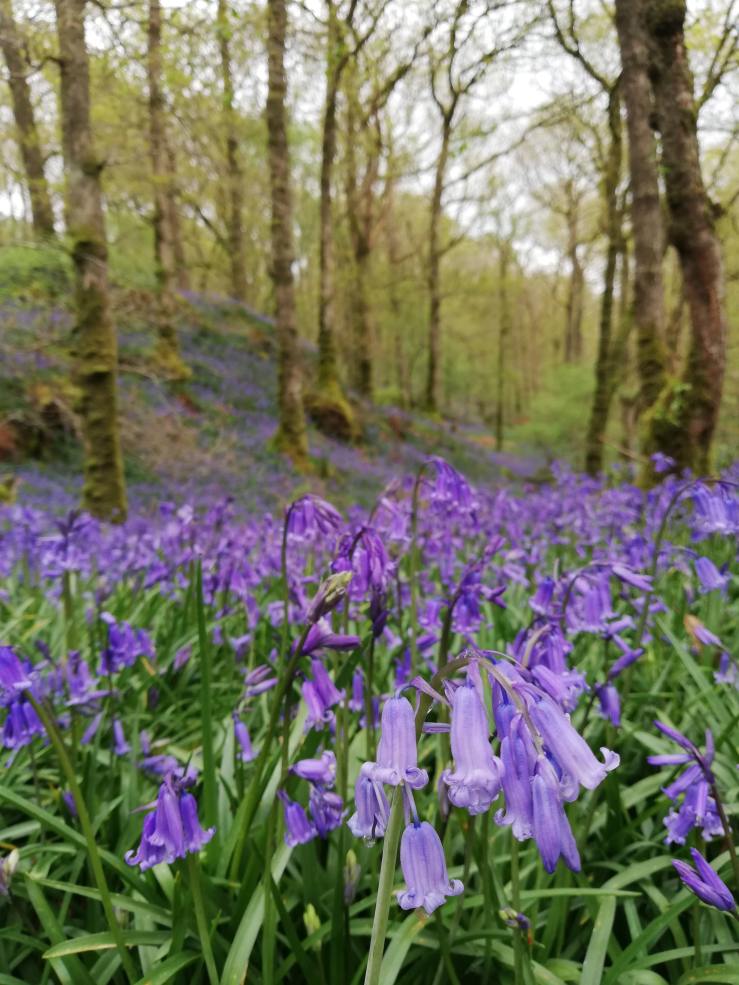
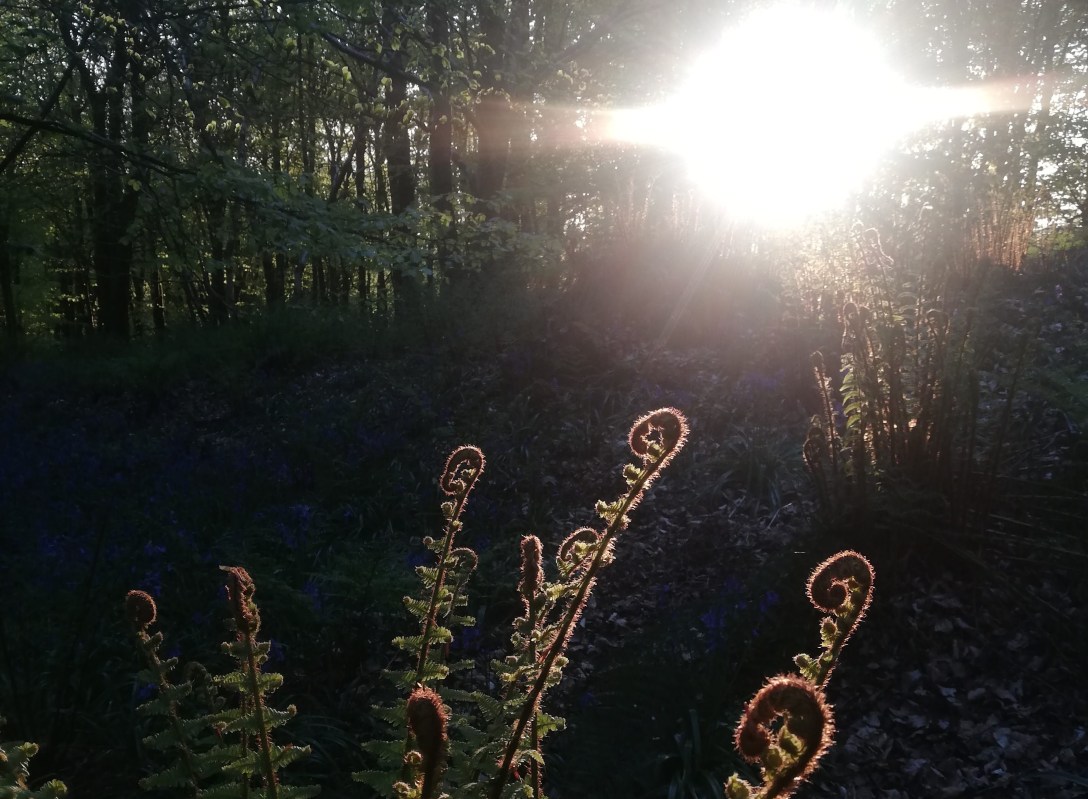
Each day brings new beauty and fresh perspectives. I remind myself of how some things are gradually, gently shifting despite the daily elemental turmoil. The lambs pronk in the fields. I see the first line of ducklings following their mum. Siskins, redpolls and goldfinches join the blue tits and nuthatches on the feeders. Sweet cicely, garlic-mustard and dandelion begin to green the hedgerows. My chives are prolific; they seem to have boldly ignored the weather. Bluebells cloak the woodland floors in a sea of fallen sky. The dawn chorus echoes through valleys and cuckoos arrive to steal a space in another bird’s well-made nest. 

And so, mid-May arrives, and still the temperatures are swinging wildly, rain showers blast through and my winter woollens are not yet retired to the wardrobe. There have been glimpses of warmer times: a stolen afternoon in the sun, gathering shells and driftwood on a cherished beach, and a bone-achingly cold swim in the sea off the coast of south-west Scotland. A reminder of what is waiting around the seasonal corner. A glimmer of hope. 
Life on wheels – why?

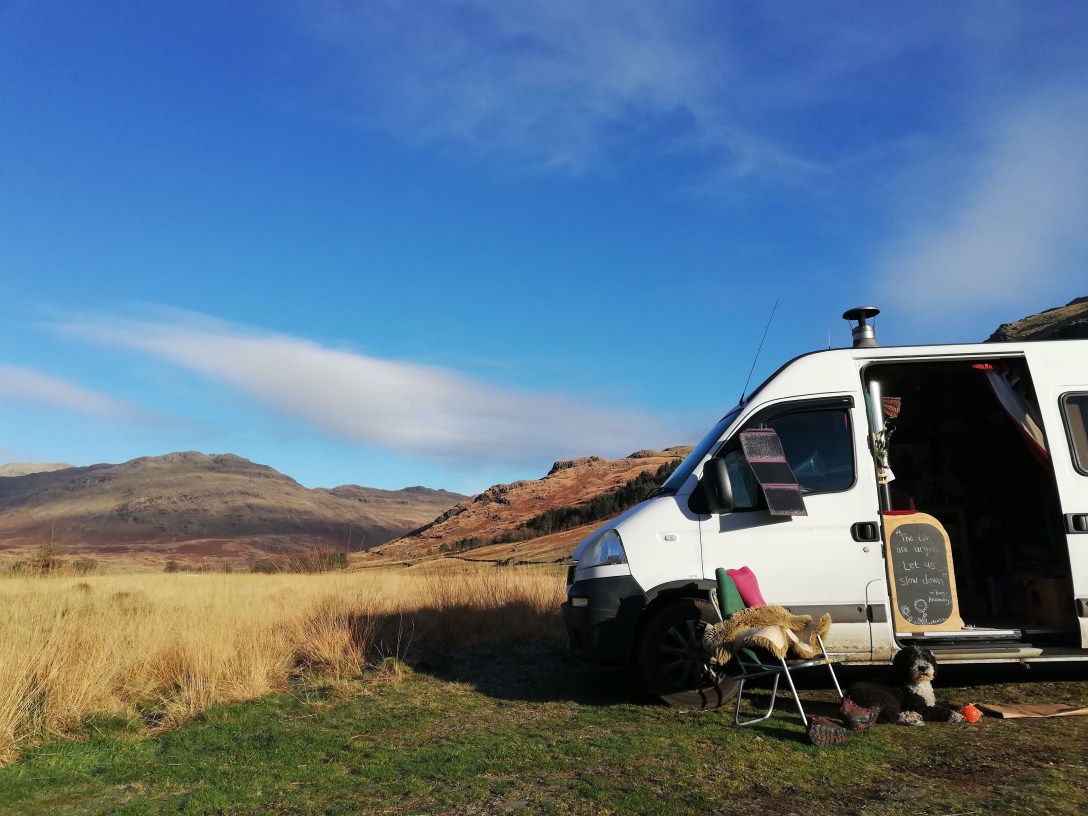
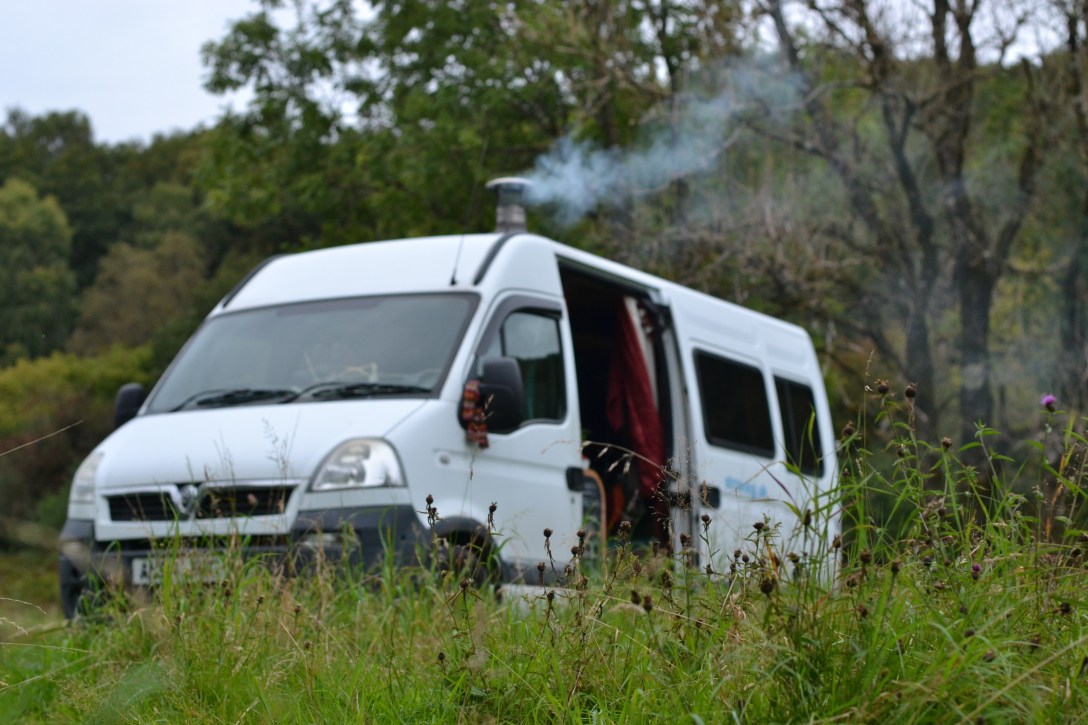
A question I get asked regularly is why I’ve chosen to live in a van. The answer lies somewhere between choice and necessity. Mainly, this is a choice because I know of no other way that I could live with this relative freedom to park up in many natural, wild spaces and get the immersion in nature that I feel I need as a vital part of my life. In a smaller part, it’s necessity, because I haven’t found a way of earning enough money- that doesn’t feel destructive to the planet and that is also healthy for me- to buy a piece of land to live this low impact life in one place. In some ways this is the dream of rooting myself in the rhythm of one place, to get to know it intimately and it me. But the current (and numerous) obstacles to owning land in the UK make me think this is a dream that will not be realised. 

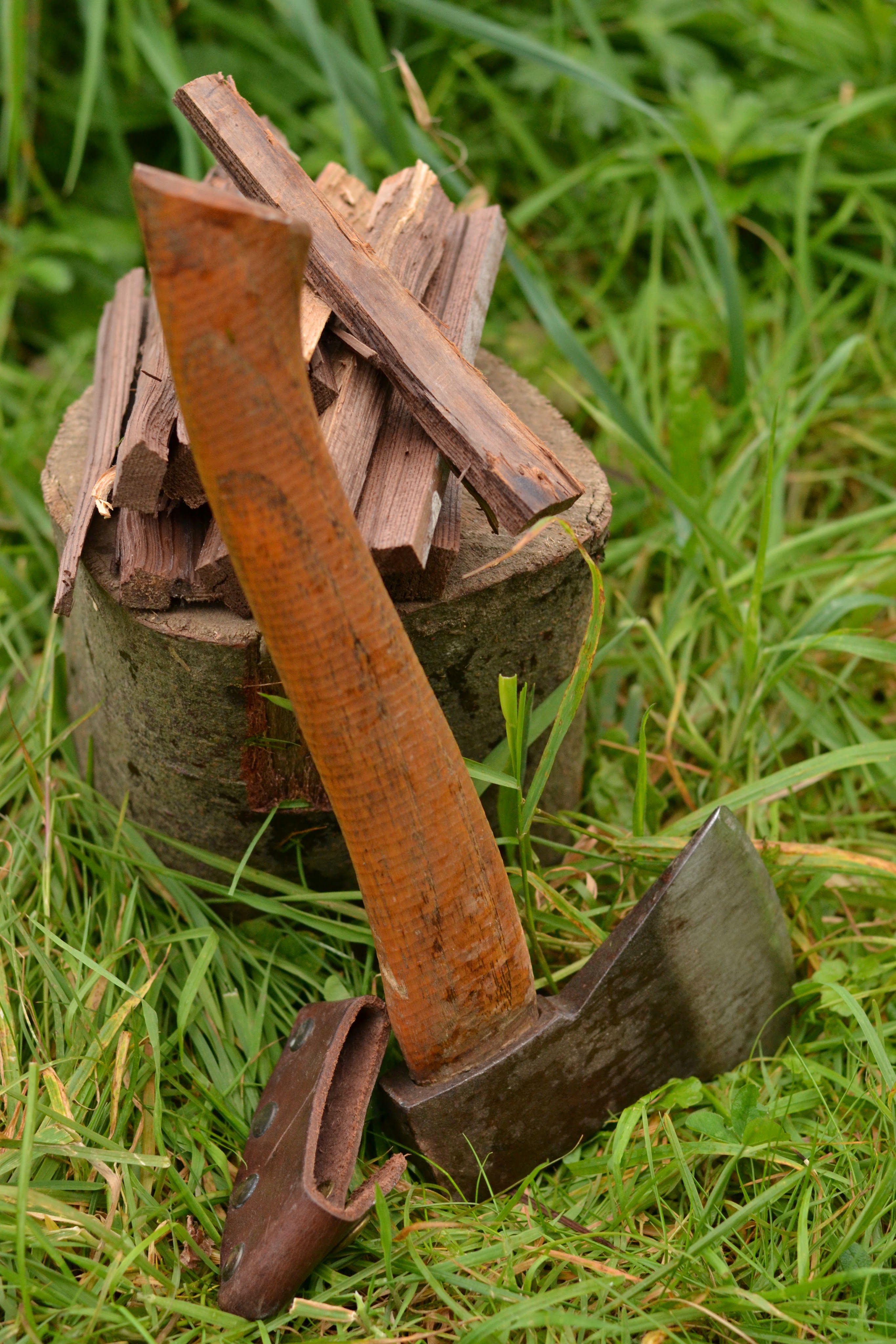
And right now that feels ok because I have found many ways of creating a connected and rich life while not being rooted in one place. Some of these practices are simple- sitting silently and observing, listening to the sounds of a place, walking barefoot. I also love to forage and I often remember places I stay because of something I foraged there; greens, berries, firewood. I now have a mental map of the places I’ve been, based on the things I’ve gathered there. 

I can’t say it’s easy living in this way. There is nothing particularly convenient about it. But I’ve discovered that I like to challenge myself with finding resourceful and low-impact ways of doing things. With limited space, everything has to earn its place, so I love to find multiple functions for one object; my cajon is also a table, a stool, and a laundry basket.

I’ve realised that modern ways of living, though seemingly convenient, actually have complexity behind them and a certain way of tethering and limiting us. I don’t have a fridge, so keeping food cool is obviously tricky. If I did have a fridge, I’d need a more sophisticated power set up and I’d probably have to spend time on sites charging up. That would mean more expense, more technology to maintain, more emissions. That could be limiting for me in terms of finances and freedom. My ways around it are to eat less foods that need refrigeration, or to use a stream or river to keep things cool. (Making ghee out of butter which lasts a couple of months unrefrigerated means I can have some little luxuries!) 

On the whole, not having a fridge is a sacrifice I’ve found to be worth making, and doesn’t feel at all limiting, if anything it feels more freeing. My diet could be considered to be basic, but I eat far less processed ‘convenience’ food and I think carefully about what I really need to eat. I also forage more, so possibly I get more varied microbes and micro-nutrients into my gut ecosystem than if I didn’t eat wild food (there’s currently a controlled study into wild foods and how they affect the human gut microbiome, The Wild Biome Project discussed on The Food Programme: Eating Wild on BBC Radio 4). In short, I feel healthier than when I do spend time in houses and around modern conveniences. 

Space to wonder

But, let me be clear, this isn’t an Instagram lifestyle. For one thing, I shit in a bucket. And my van is of an age where she constantly needs care and repair. It is challenging. Sometimes it’s really rubbish. When your van breaks down in the middle of nowhere and you’re precariously parked in a layby, or the rain is incessant and you have condensation on every surface, not to mention moss growing on your window sills, you just wish you had a cosy, dry home to go back to. And sometimes I just don’t want to have to move on, I want to be able to say, This is where I live. Here

But living in this way I feel like I’m learning every day. No two days are the same. Generally the people I meet when I’m travelling are friendly, kind and interested. When they’re on holiday or travelling, they seem to be more open and curious, and so am I. It’s as though people have stepped out of their normal lives for a while and there’s space. That’s what it feels like to live in this way; no plans or routines, space and time to wander and wonder. There’s a richness in this life that no money can buy. I’ve met some wonderful people who are now dear friends, and this is one reason I carry on doing it. 

There may or may not come a day when I feel that this isn’t the way I want to live and I’m not thriving anymore but right now, despite the challenges, this is how I want to move in the world. There’s a freedom, a rich simplicity that I haven’t found through living any other way, and so I’ll continue to stravaig through life. 

If you’d like to receive updates when I publish a new post to my journal, please enter your email below:

Welcome to the journey

A wee note to welcome you to the stravaig journal.

In the journal, I’ll share glimpses into my journey of creative, connected living while I wander and weave around the British Isles in my humble home-on-wheels. 

Welcome to the journey!

Please add your email below if you’d like to subscribe and receive updates when I add new posts to the journal.