Life on wheels – why?

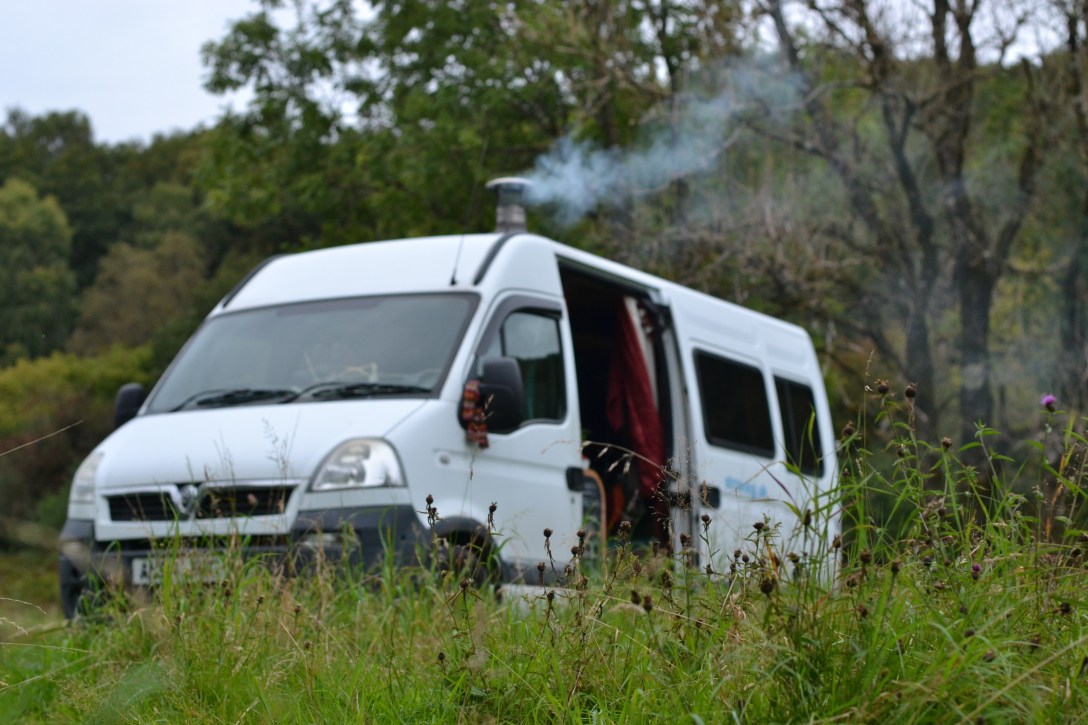
A question I get asked regularly is why I’ve chosen to live in a van. The answer lies somewhere between choice and necessity. Mainly, this is a choice because I know of no other way that I could live with this relative freedom to park up in many natural, wild spaces and get the immersion in nature that I feel I need as a vital part of my life. In a smaller part, it’s necessity, because I haven’t found a way of earning enough money- that doesn’t feel destructive to the planet and that is also healthy for me- to buy a piece of land to live this low impact life in one place. In some ways this is the dream of rooting myself in the rhythm of one place, to get to know it intimately and it me. But the current (and numerous) obstacles to owning land in the UK make me think this is a dream that will not be realised. 

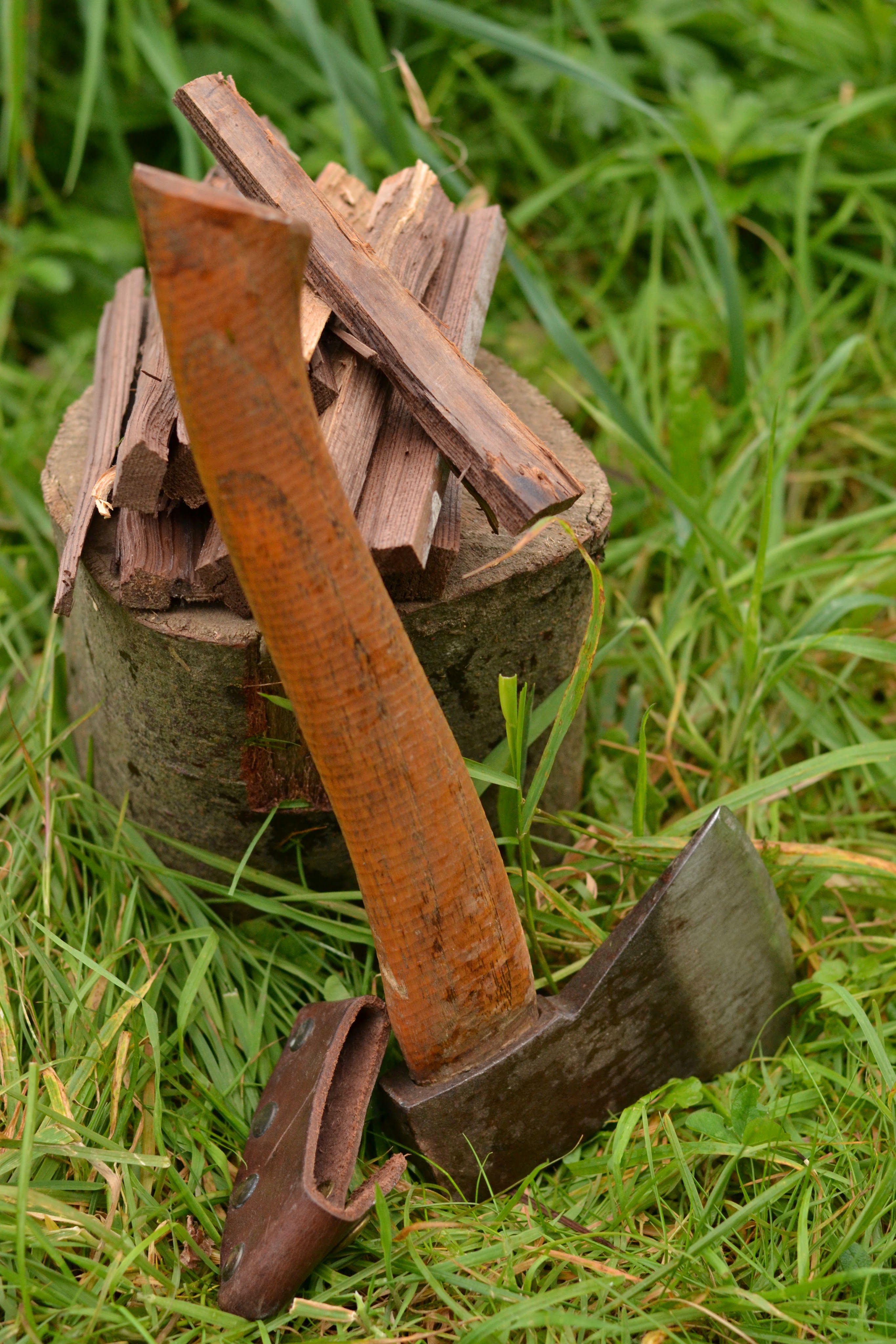
And right now that feels ok because I have found many ways of creating a connected and rich life while not being rooted in one place. Some of these practices are simple- sitting silently and observing, listening to the sounds of a place, walking barefoot. I also love to forage and I often remember places I stay because of something I foraged there; greens, berries, firewood. I now have a mental map of the places I’ve been, based on the things I’ve gathered there. 
I can’t say it’s easy living in this way. There is nothing particularly convenient about it. But I’ve discovered that I like to challenge myself with finding resourceful and low-impact ways of doing things. With limited space, everything has to earn its place, so I love to find multiple functions for one object; my cajon is also a table, a stool, and a laundry basket.

I’ve realised that modern ways of living, though seemingly convenient, actually have complexity behind them and a certain way of tethering and limiting us. I don’t have a fridge, so keeping food cool is obviously tricky. If I did have a fridge, I’d need a more sophisticated power set up and I’d probably have to spend time on sites charging up. That would mean more expense, more technology to maintain, more emissions. That could be limiting for me in terms of finances and freedom. My ways around it are to eat less foods that need refrigeration, or to use a stream or river to keep things cool. (Making ghee out of butter which lasts a couple of months unrefrigerated means I can have some little luxuries!) 

On the whole, not having a fridge is a sacrifice I’ve found to be worth making, and doesn’t feel at all limiting, if anything it feels more freeing. My diet could be considered to be basic, but I eat far less processed ‘convenience’ food and I think carefully about what I really need to eat. I also forage more, so possibly I get more varied microbes and micro-nutrients into my gut ecosystem than if I didn’t eat wild food (there’s currently a controlled study into wild foods and how they affect the human gut microbiome, The Wild Biome Project discussed on The Food Programme: Eating Wild on BBC Radio 4). In short, I feel healthier than when I do spend time in houses and around modern conveniences. 

Space to wonder

But, let me be clear, this isn’t an Instagram lifestyle. For one thing, I shit in a bucket. And my van is of an age where she constantly needs care and repair. It is challenging. Sometimes it’s really rubbish. When your van breaks down in the middle of nowhere and you’re precariously parked in a layby, or the rain is incessant and you have condensation on every surface, not to mention moss growing on your window sills, you just wish you had a cosy, dry home to go back to. And sometimes I just don’t want to have to move on, I want to be able to say, This is where I live. Here

But living in this way I feel like I’m learning every day. No two days are the same. Generally the people I meet when I’m travelling are friendly, kind and interested. When they’re on holiday or travelling, they seem to be more open and curious, and so am I. It’s as though people have stepped out of their normal lives for a while and there’s space. That’s what it feels like to live in this way; no plans or routines, space and time to wander and wonder. There’s a richness in this life that no money can buy. I’ve met some wonderful people who are now dear friends, and this is one reason I carry on doing it. 

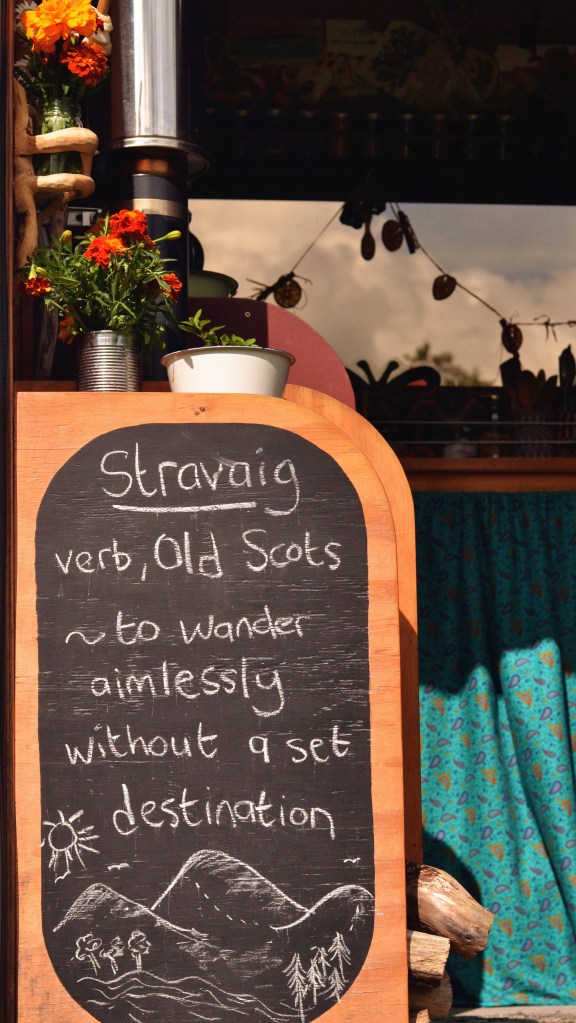
There may or may not come a day when I feel that this isn’t the way I want to live and I’m not thriving anymore but right now, despite the challenges, this is how I want to move in the world. There’s a freedom, a rich simplicity that I haven’t found through living any other way, and so I’ll continue to stravaig through life. 

If you’d like to receive updates when I publish a new post to my journal, please enter your email below:

The return

For those who have read my previous journal posts, it may be clear that I enjoy foraging. Foraging has taken on many forms for me, and this continues to grow as I learn more and experience each turning season and visit new places. Foraging extends deeper than a way to fill my belly. Undoubtedly that’s part of it, but foraging has layers. We can forage in different ways- for new skills, for connection, for meaning. 

As someone who lives on the road, foraging is an act that offers me a way to connect with place. Moving around can sometimes feel unsettling, but by noticing the natural surroundings it can help me to feel grounded. To forage I have to use my knowledge and senses, and this means I’m present to the physical space I’m in. I need to interpret what I see. I need to know what type of trees are in the wood, where the water is flowing. I need to be curious and observant. This knowledge I’ve gathered has come largely through experience, from going out with my backpack and basket. 

There’s a sentiment which I believe is attributed to tribal hunter-gatherers, “I’m just taking my spears for a walk”, rather than saying explicitly that you’re off to go hunting. It’s a way of not having any expectations of what you might catch, and quite possibly it’s a way of not jinxing any potential good fortune and not being hubristic. This is a sentiment I like to extend to foraging. I try to carry this in my mind when I’m also carrying my foraging basket. Rather than having this idea that I’m going out to find a particular fungi, or I’ll hit the jackpot with a megaload of bilberries, I say to myself that I’m just taking my basket for a walk. I try to be open to what might appear in my path, and recently, this was something special.

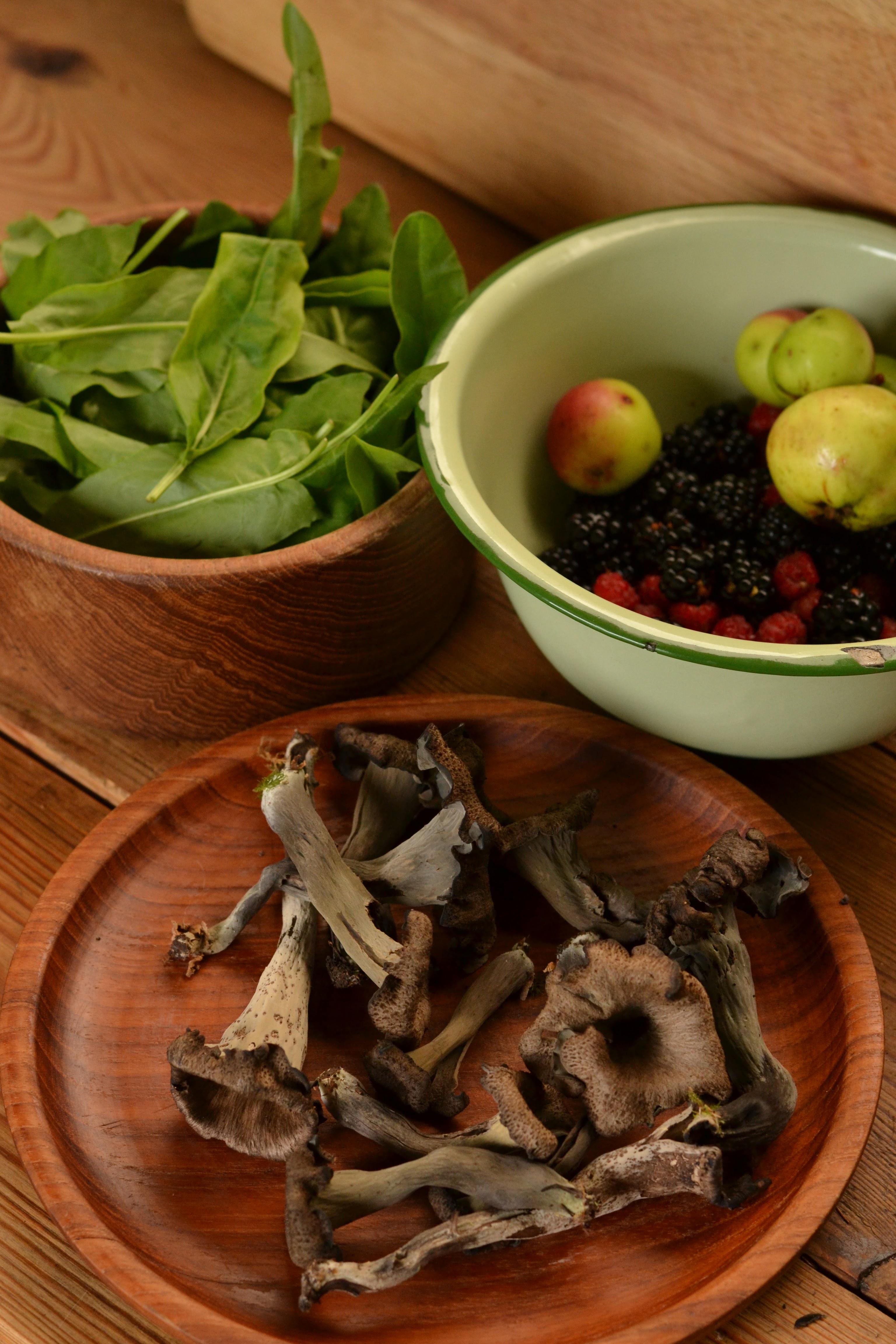
I was taking my basket for a walk in a deciduous woodland in the area of Newton Stewart, Dumfries and Galloway. Of course I had the hope that I might find some kind of fungi, but I wasn’t attached to the outcome. I realised I’d found myself on a deer trail. I could see the obvious signs of a slender path frequented by these beautiful creatures. Within a few heartbeats of this realisation I turned on the path and looked down at an antler on the ground. It was lying a few hoof steps away from a small shallow burn. I felt I was in deer territory and then like a sure sign the antler was there to confirm it. This was one of the unusual and unexpected gifts of taking my basket for a walk. I also happened to find some perfect hedgehog fungi, a small troop of chanterelles and I revisited a precious cluster of horn of plenty to find a couple of fresh ones. I returned with some dinner, and the antler. Even stranger, an hour or so later, in an obscure place in the woods, I met a person that I had met a few years earlier in Cumbria under very different circumstances. It was a serendipitous meeting; perhaps that antler acted like an antenna. 

I also have an interest in medicinal and therapeutic properties of plants and wild food. I have gathered and made my own tinctures from hawthorn, lemon balm, bilberry, goldenrod, to name a few. It may be that these tinctures have no physiological effect, but it isn’t just about the physical effect and the resulting tincture, it’s about the finding, the gathering, the creating. This is all part of the medicinal properties for me. I believe that this is why GPs are now prescribing walks in nature, because nature is medicine, and it’s where we’re from and where we have become disconnected from. It might sound woo woo or like I’m a tree hugger, but for me being “in nature”- foraging for food, medicine, meaning- is not only healing, it is vital to what makes me human and animal. I feel connected in a way I never will from going into a supermarket or pharmacy. 

On the rare occasion that I return from a walk with an empty basket, I have a calm mind and a satiated spirit. I cannot remember a time when I have returned without seeing or hearing something new; a bird call that I’ve never heard before, or a flower that has never bloomed before me until now. I may not have food for my belly but my soul is content. I return changed in some way. 

Fungi fascination

August and September are the months when my fungi field guides and foraging books make an appearance. I pore over them like a gripping novel. Each year I get to know a few more fungi, some tentatively, with plenty of cross-referencing for reassurance. It’s taken me years to build up the knowledge and experience to the stage where I can now confidently identify around ten edible types, and that for now, is plenty for me. Personally, foraging isn’t just about finding food anyway, it’s a lot deeper than that, something I’ll talk about in later posts. 

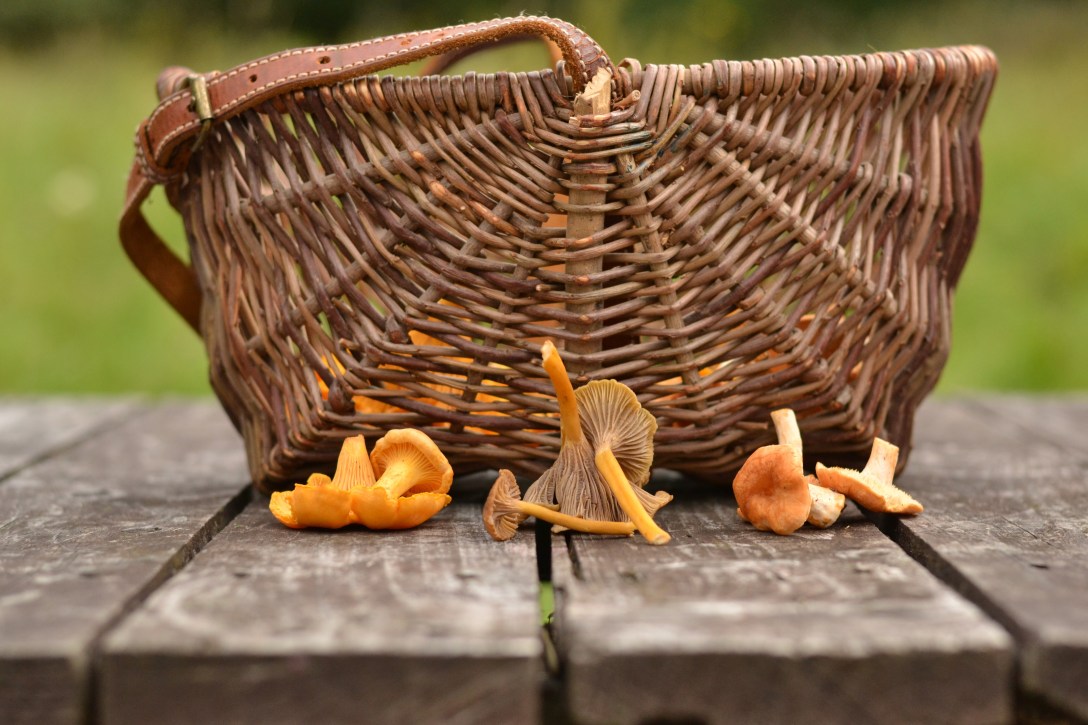
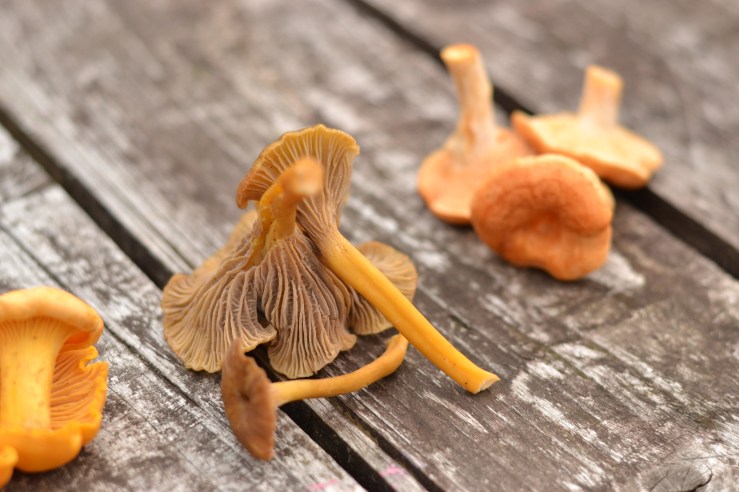
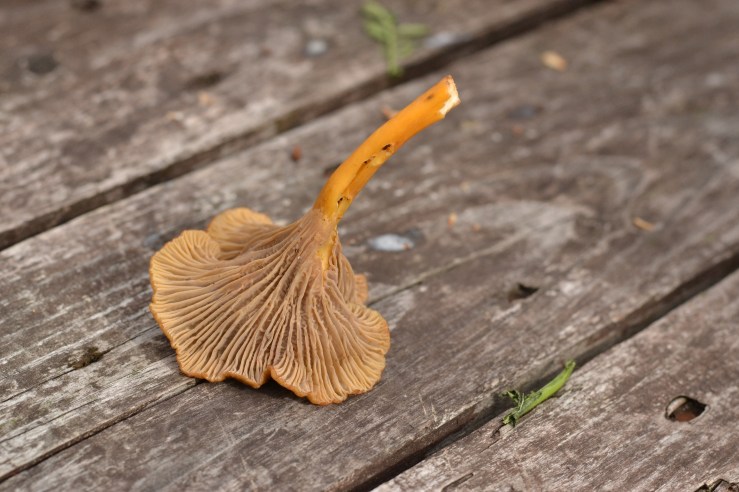
On a recent foray in the woods, my edible finds were chanterelles, winter chanterelles, and terracotta hedgehogs (left to right in the top photo). Interestingly, the hedgehogs I found were quite small and had a little dimple, some even a small hollow in the centre of the cap, not a characteristic I’ve seen before in this fungi. I did a quick search on Galloway Wild Foods, a fantastic resource for foragers and particularly useful as I’m in the Dumfries and Galloway region, where Mark Williams describes that he’s also found a few specimens in various locations with the same feature. These may or may not be a species called depressed hedgehog (!), however this isn’t known to grow in the UK, and they may just be a variant of the terracotta variety. Either way, they are edible and tasty!

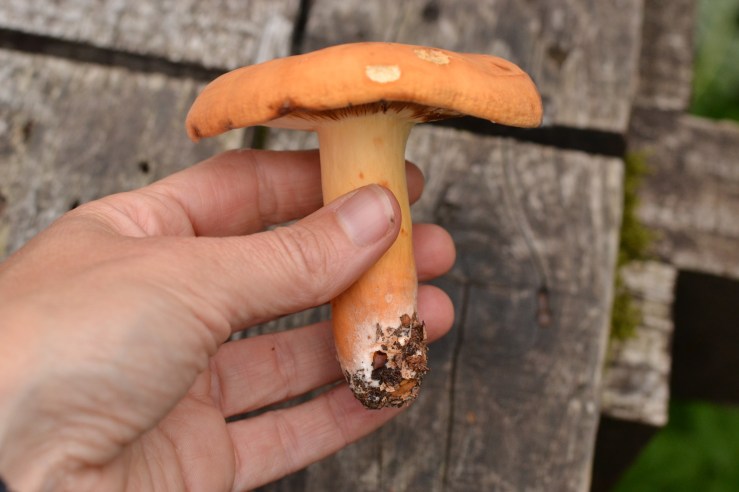
I also found an edible milk cap that I’ve never seen before, and managed to identify it as lactifluus volemus, sometimes known as the Weeping Milk Cap (the specimen I collected is pictured in my hand). It was quite stunning how profusely the milk exuded from the cap when I cut it. Although this is classed as an edible fungi, I’m just not there yet, especially since it smells like a rubbery old fish when it’s been collected (which apparently disappears on cooking)! 

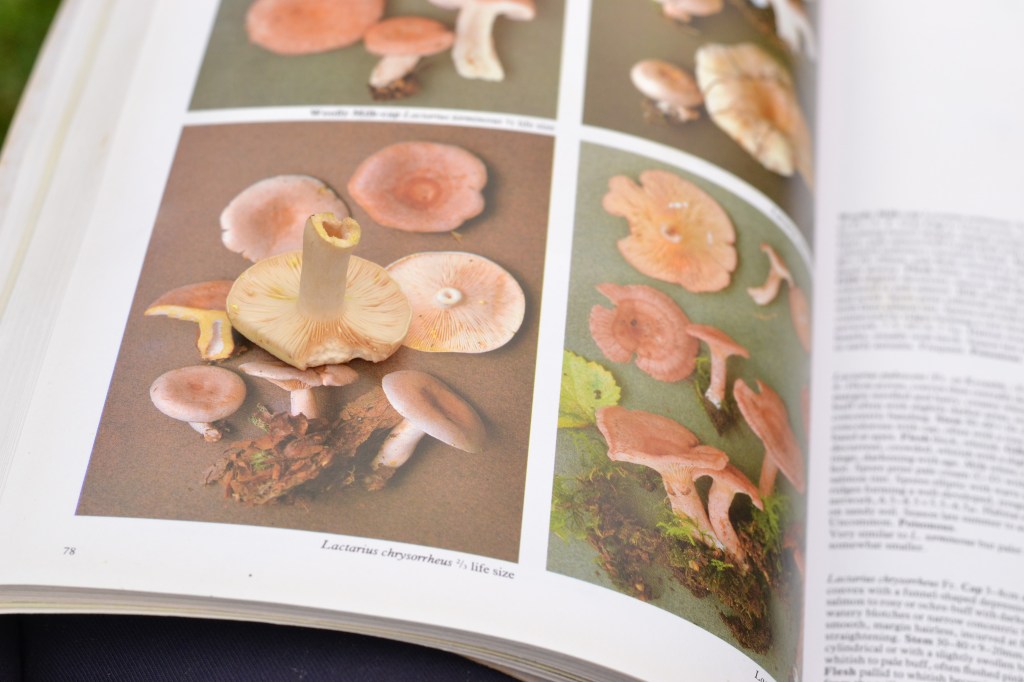
My non-edible find was another, smaller, milk cap that exudes white milk which turns yellow after a few seconds, a lactarius chrysorrheus (pictured resting on a page from the legendary fungi book by Roger Phillips, Mushrooms and other fungi of Great Britain and Europe). 

This is just a few of the fungi I found on one three-hour foray, which covered a remarkably small area of ground. It’s a different way of moving when you’re looking for fungi; you can’t walk at a fast pace, you have to slow yourself down, observe the surroundings, and sink closer to the soil. You don’t follow the worn, linear paths, stomping and sweating; you take considerate steps into the brash and leaf litter, winding as you walk, stopping often to scan the ground. Crouching down to get a fox’s-eye view of the territory, allowing your eyes to adjust, the fungi realm reveals itself. 


A wee disclaimer that this post is not intended as an identification guide. Please do your own extensive research and be absolutely sure of identification if you are planning to eat any wild fungi you collect.

Season of abundance

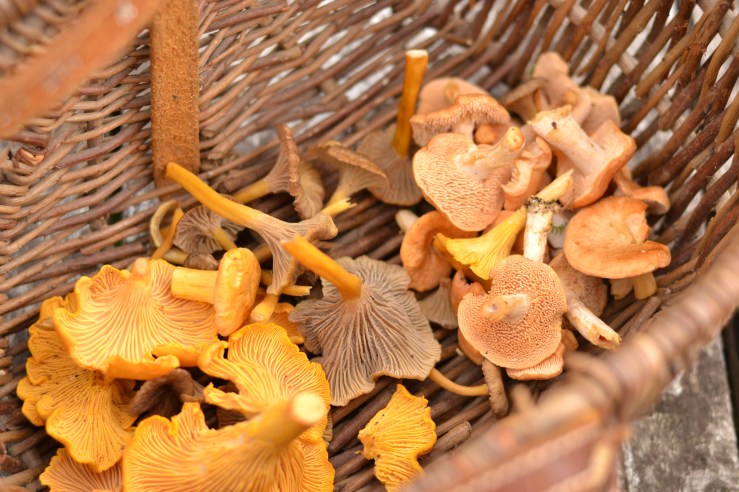
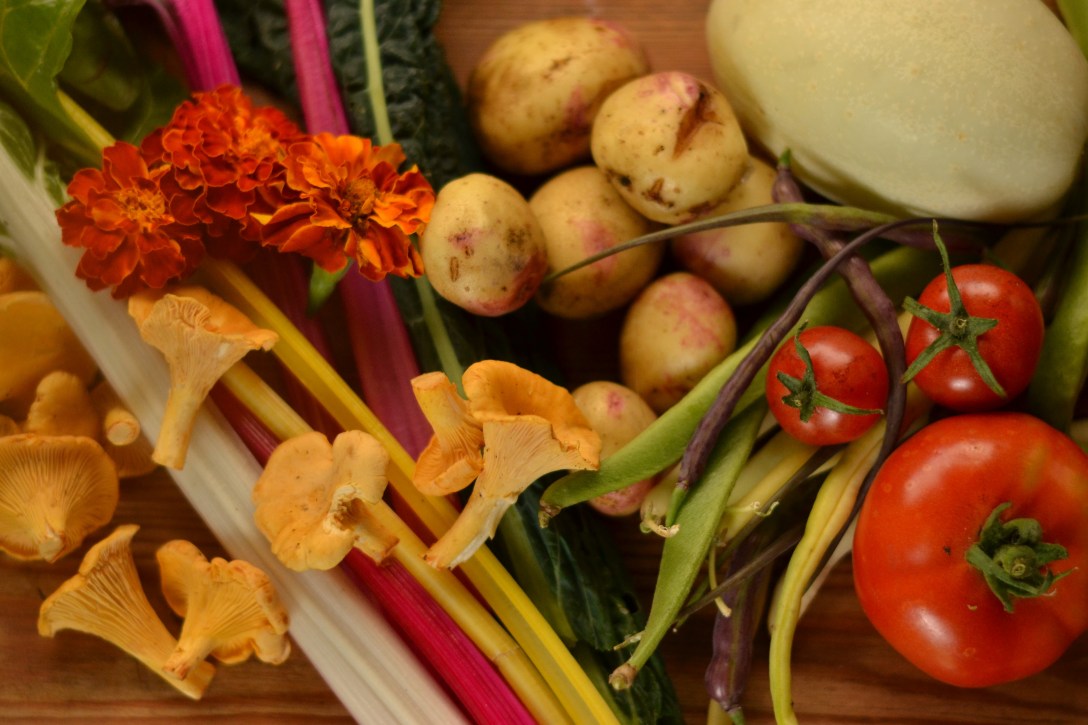
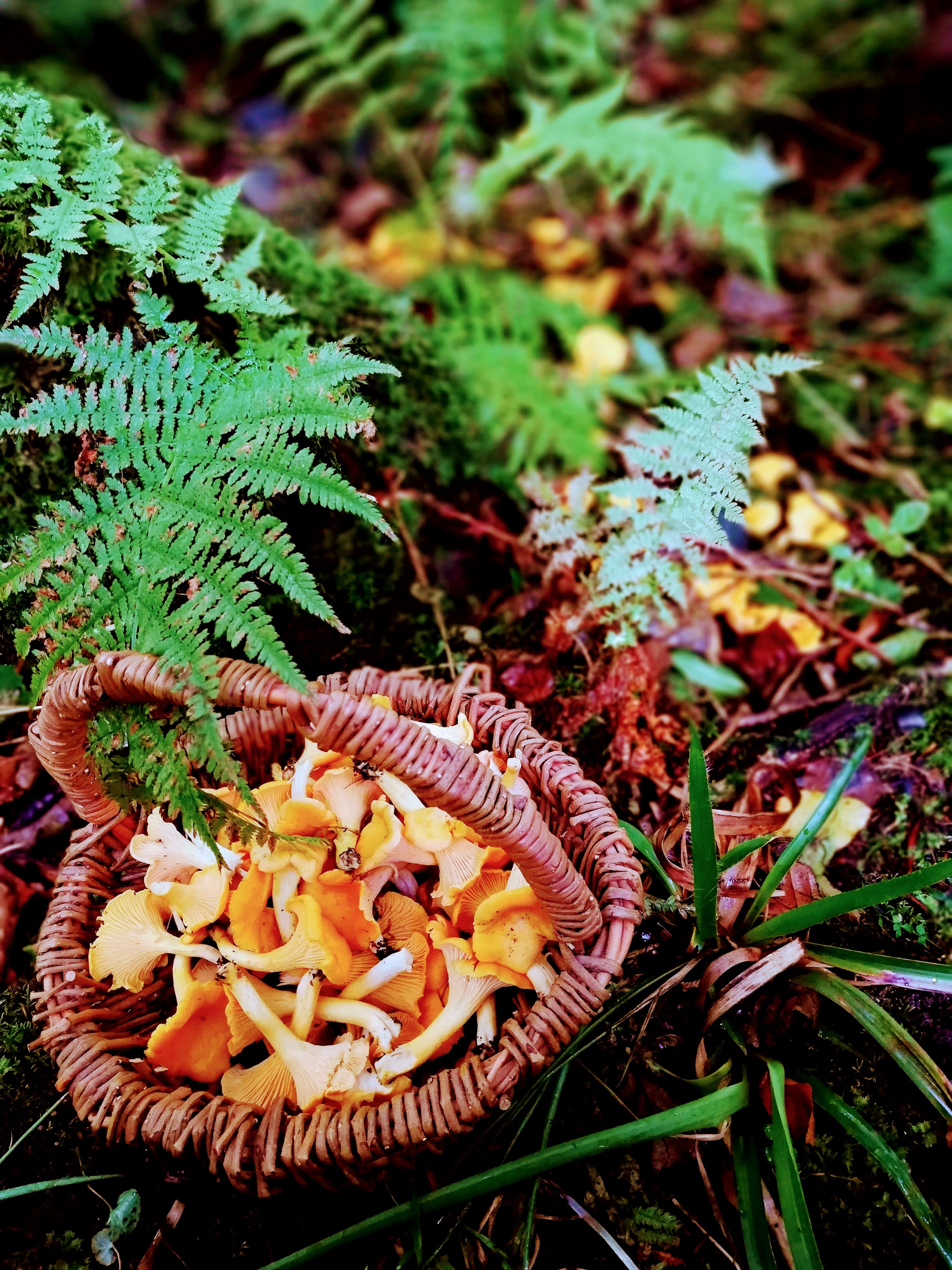
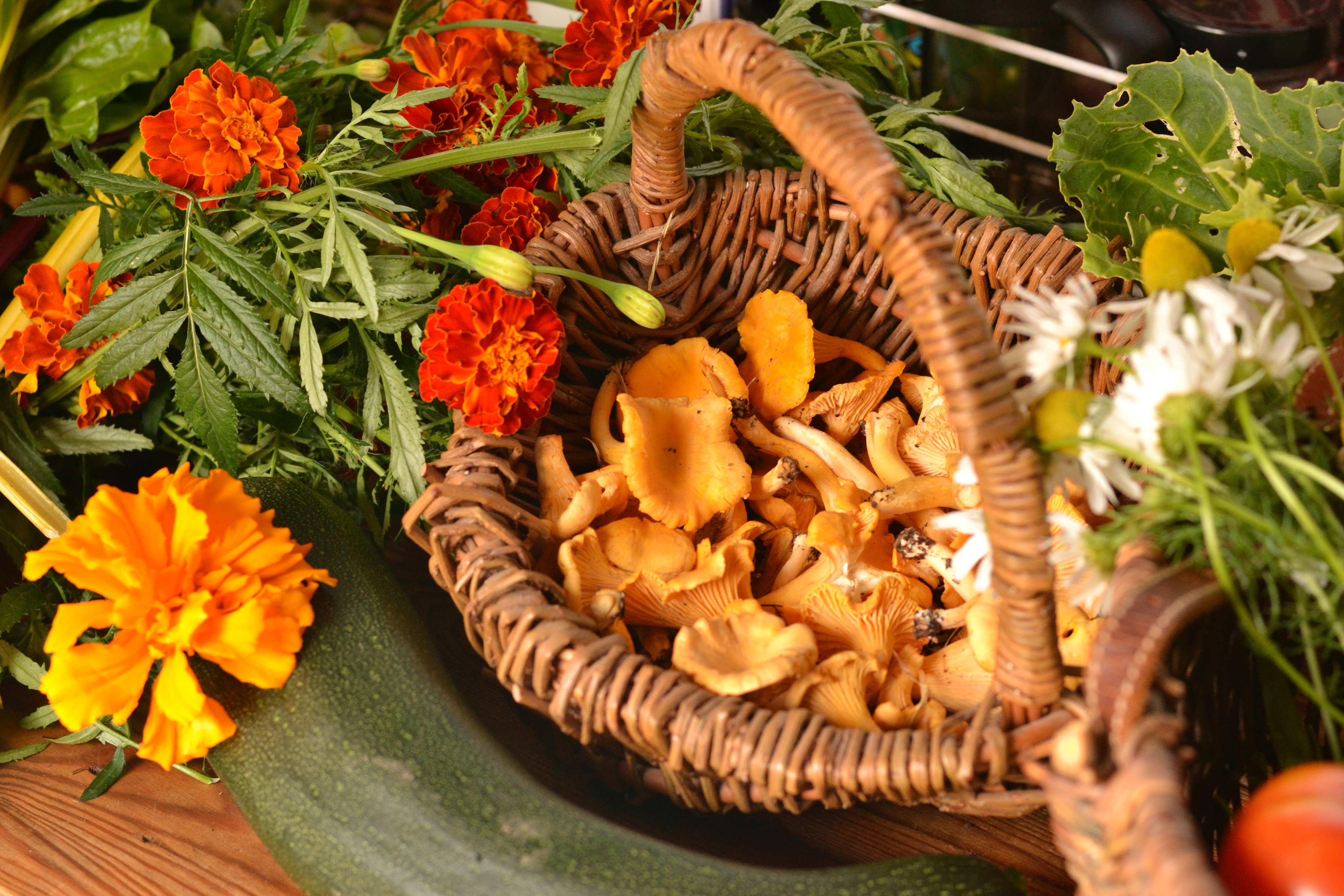
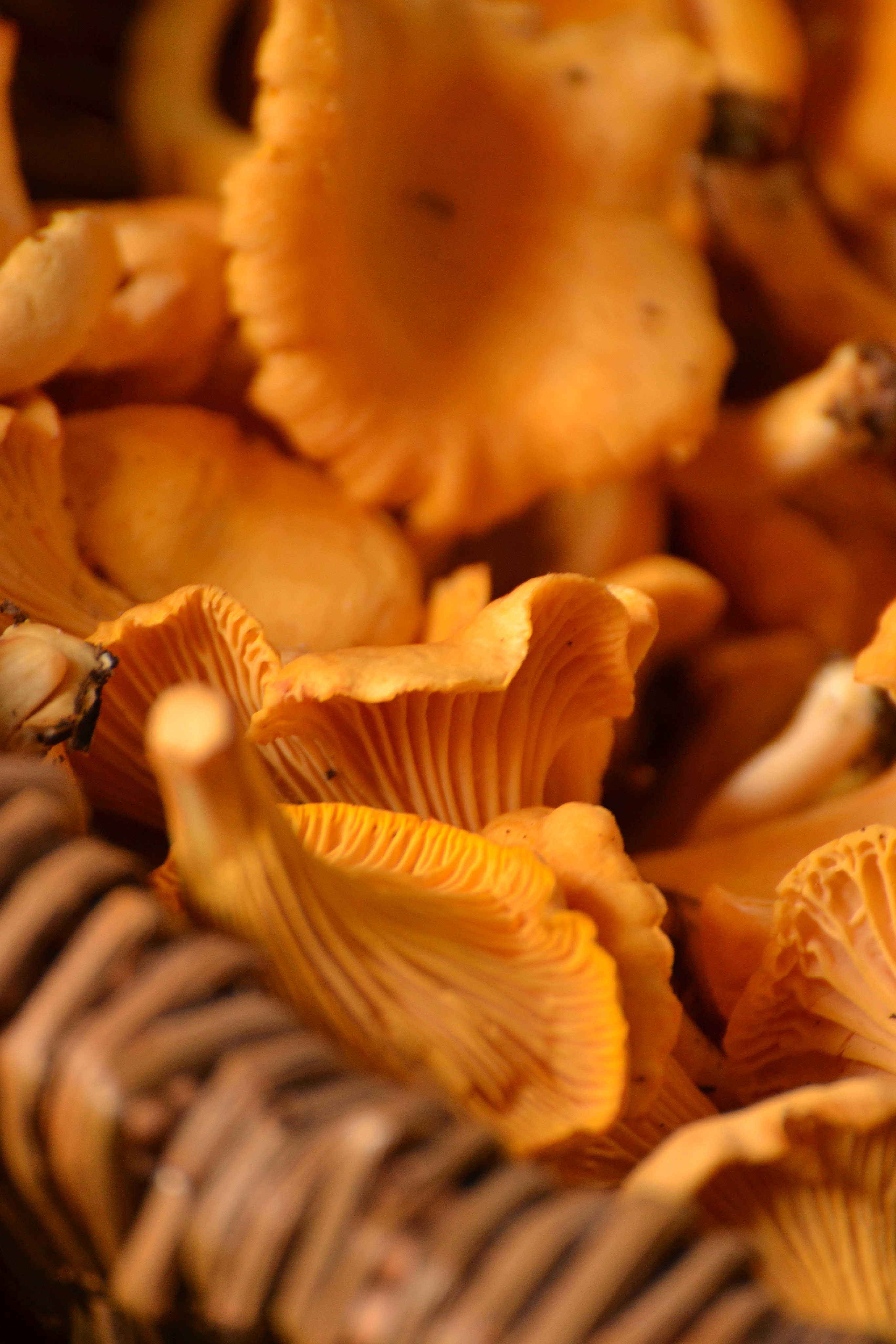
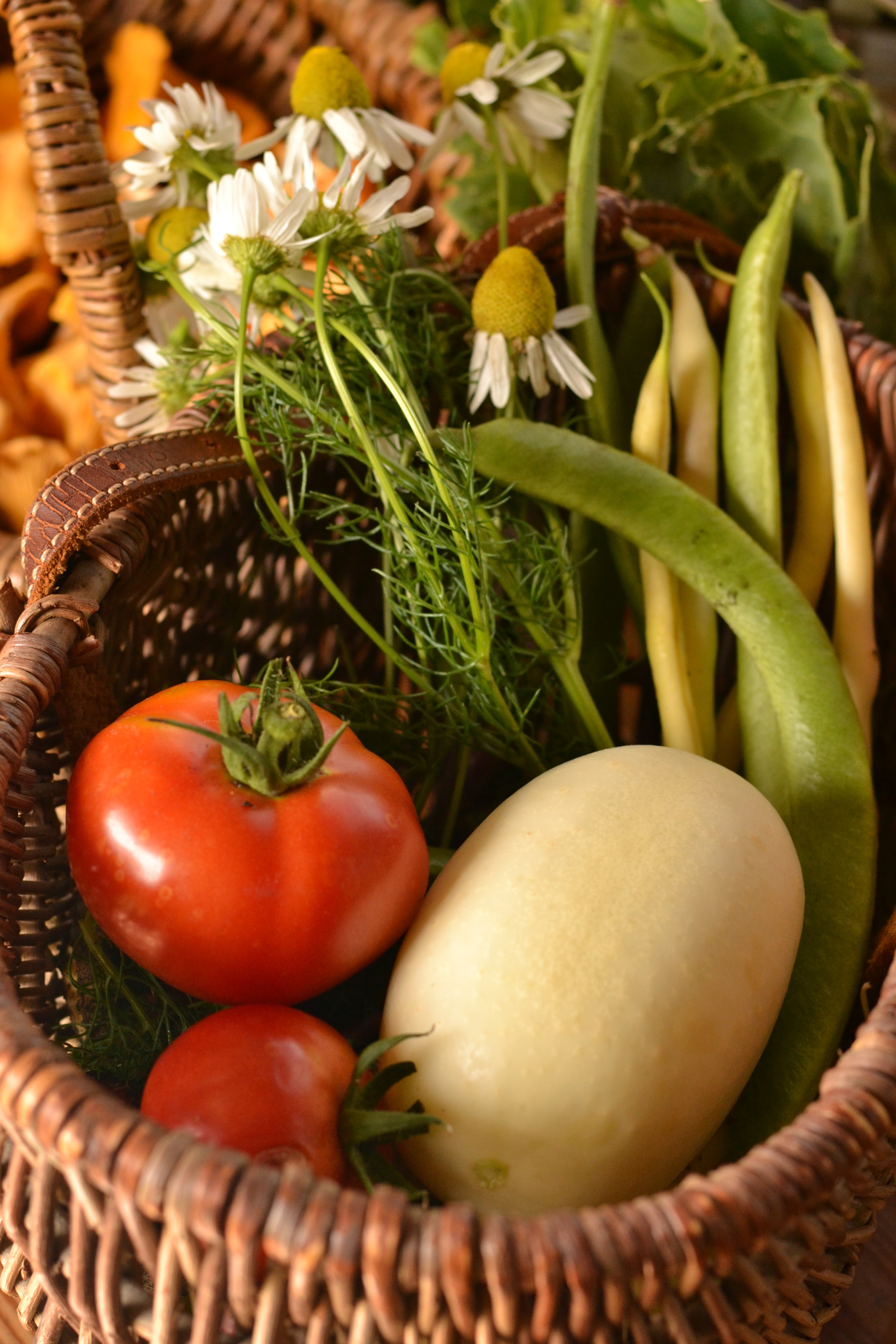
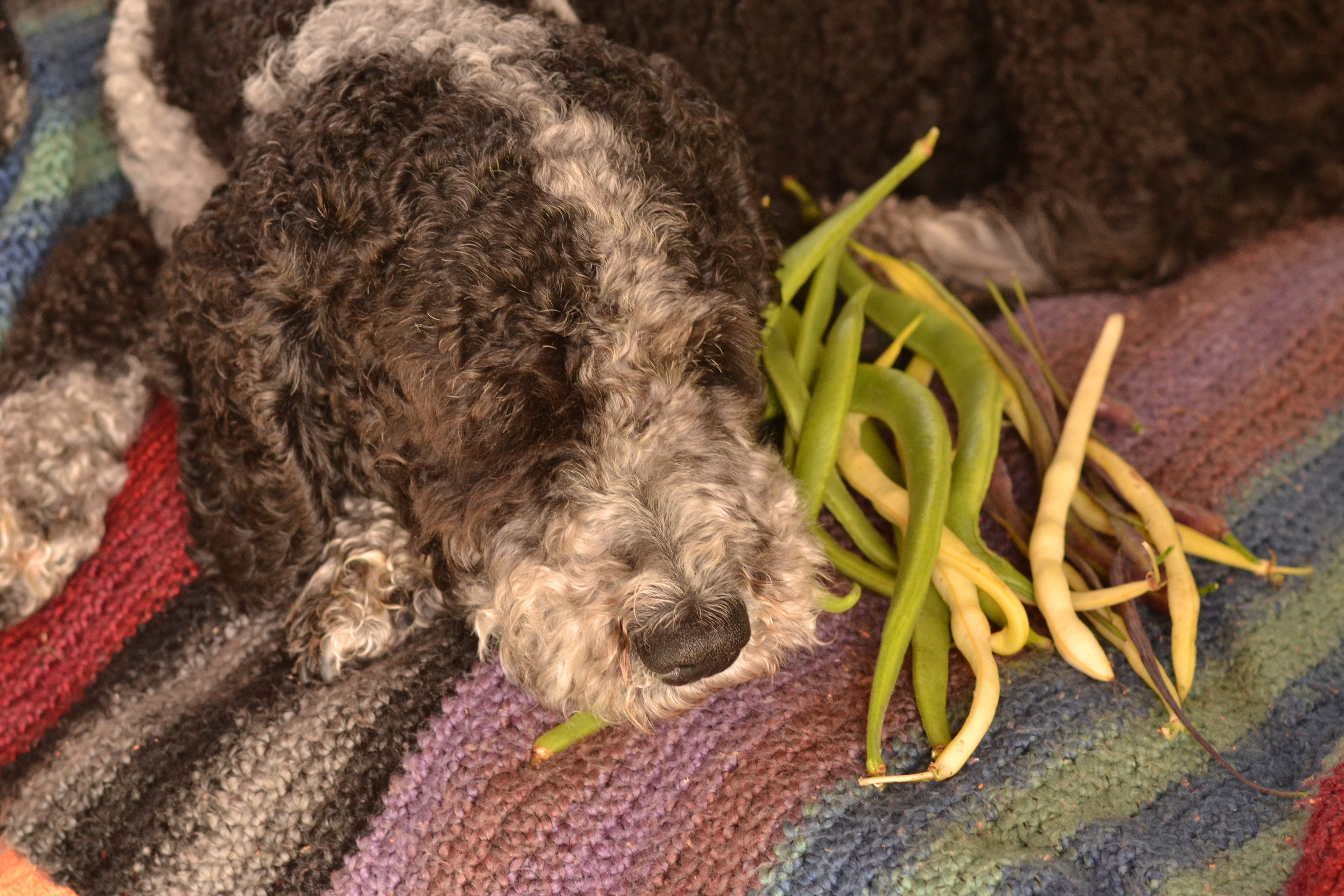
A river of chanterelles spot-lighted by sunlight squinting through the tree canopy. This, for me, signals the season of abundance and harvest. There’s nothing so exciting for me as finding droplets of gold among the moss and beech leaf litter. It’s a simple and wild kind of delight, and the joy is fleshed out by sharing the find with friends. In turn, they share the fruits of their burgeoning garden. I am blessed by the abundance of nature and the kindness of friends. Nessie (my van, in case you didn’t know her by name!) is overflowing. Beanie, my part-time van companion is guarding the beans. I’ll let the photos do the rest of the talking.

Enter your email below to receive updates when I publish a new post to my journal:

Foraged ferments and wild art

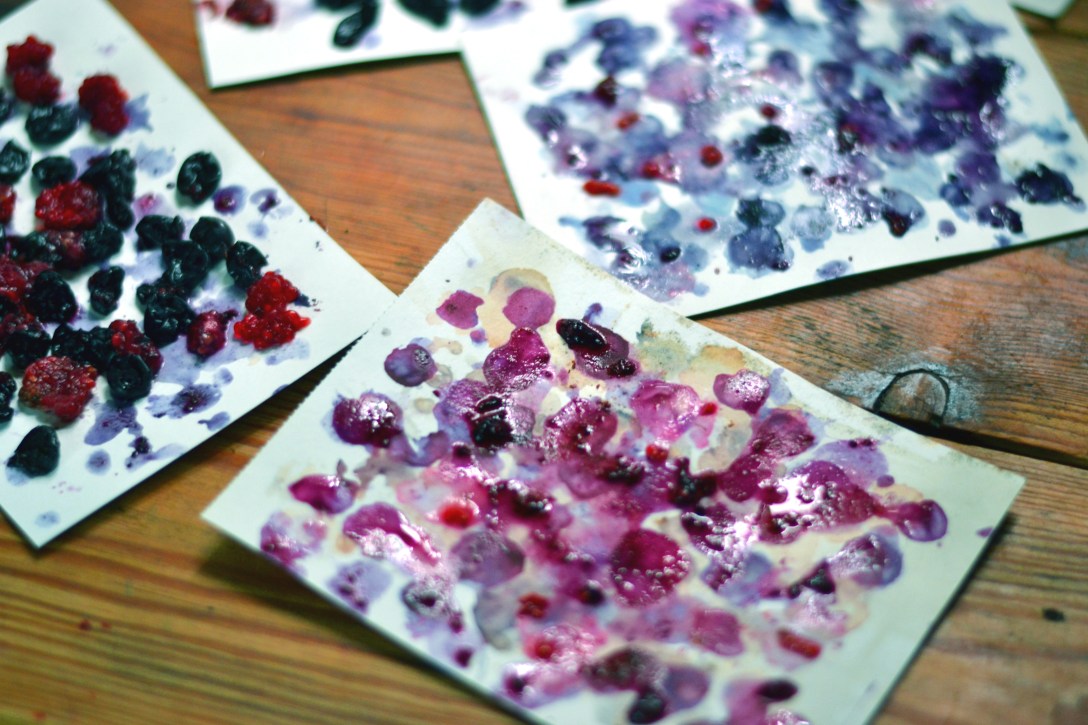
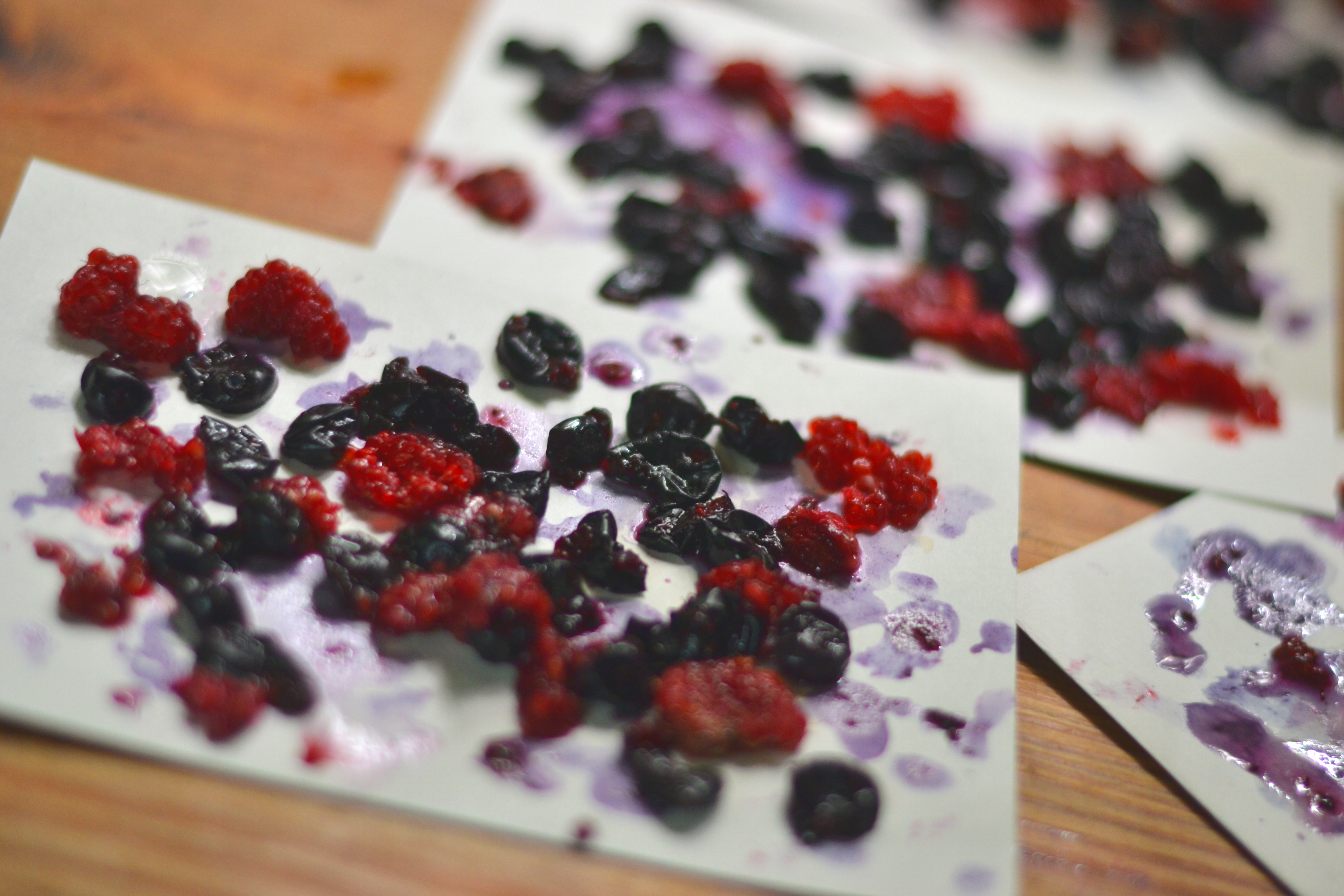
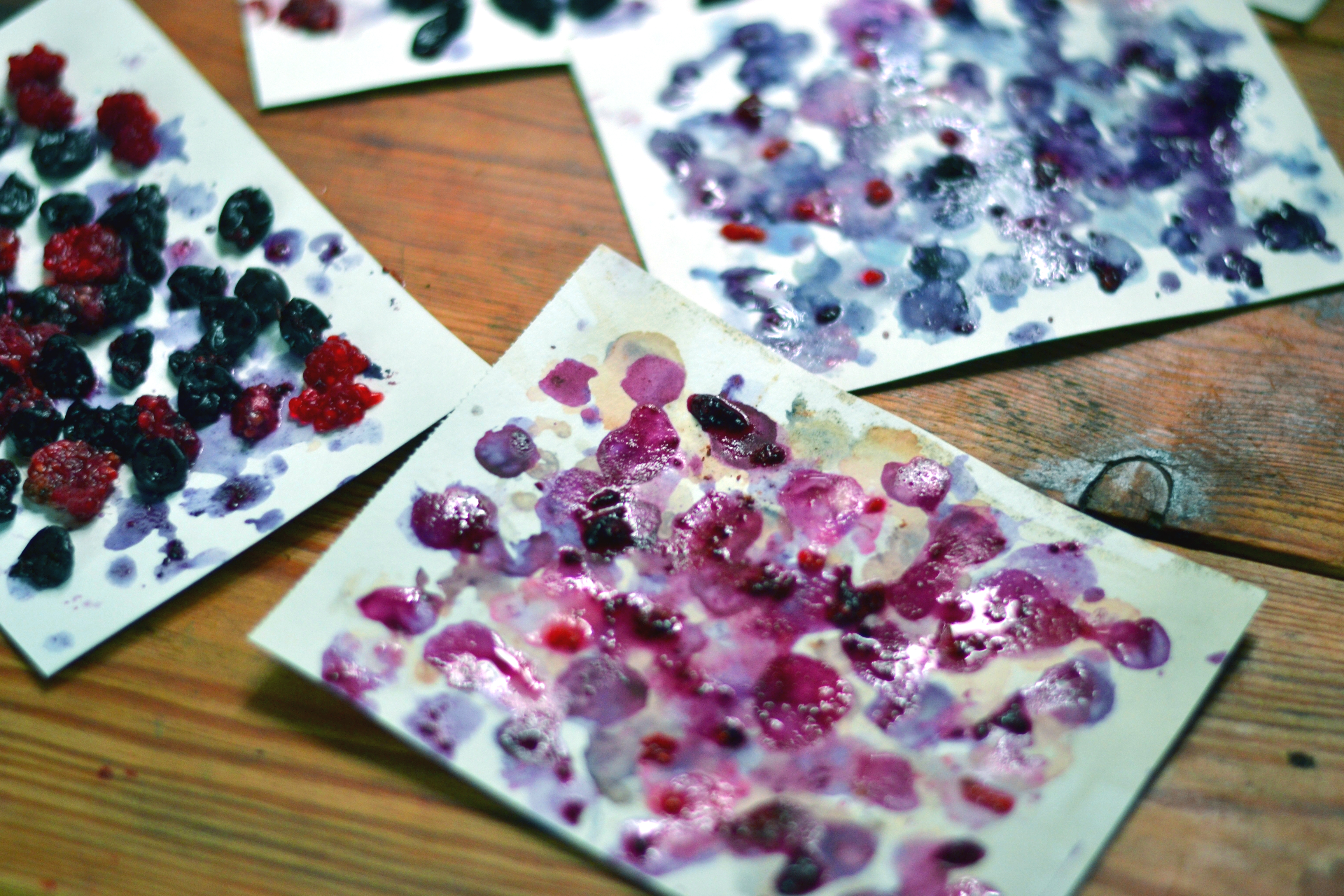
The bilberries and raspberries have been abundant in the little corner of South West Scotland I’ve been exploring this July. I love how my fingers are stained purple from picking, and my tongue turns blue from the wild feast. When I’ve had my bellyful, I like to smoosh some basket-bruised berries on pieces of card to make postcards with the raw pigment. Over the coming weeks and months the colours change and fade. It’s a reminder that natural dyes are just that, natural and organic, they have a life of their own. They are not always permanent in the way chemical dyes can be. I like that. I like it when things remind me of the cycles of life and change and death, the vibrant violet of fresh bilberry juice maturing to muted brown. 

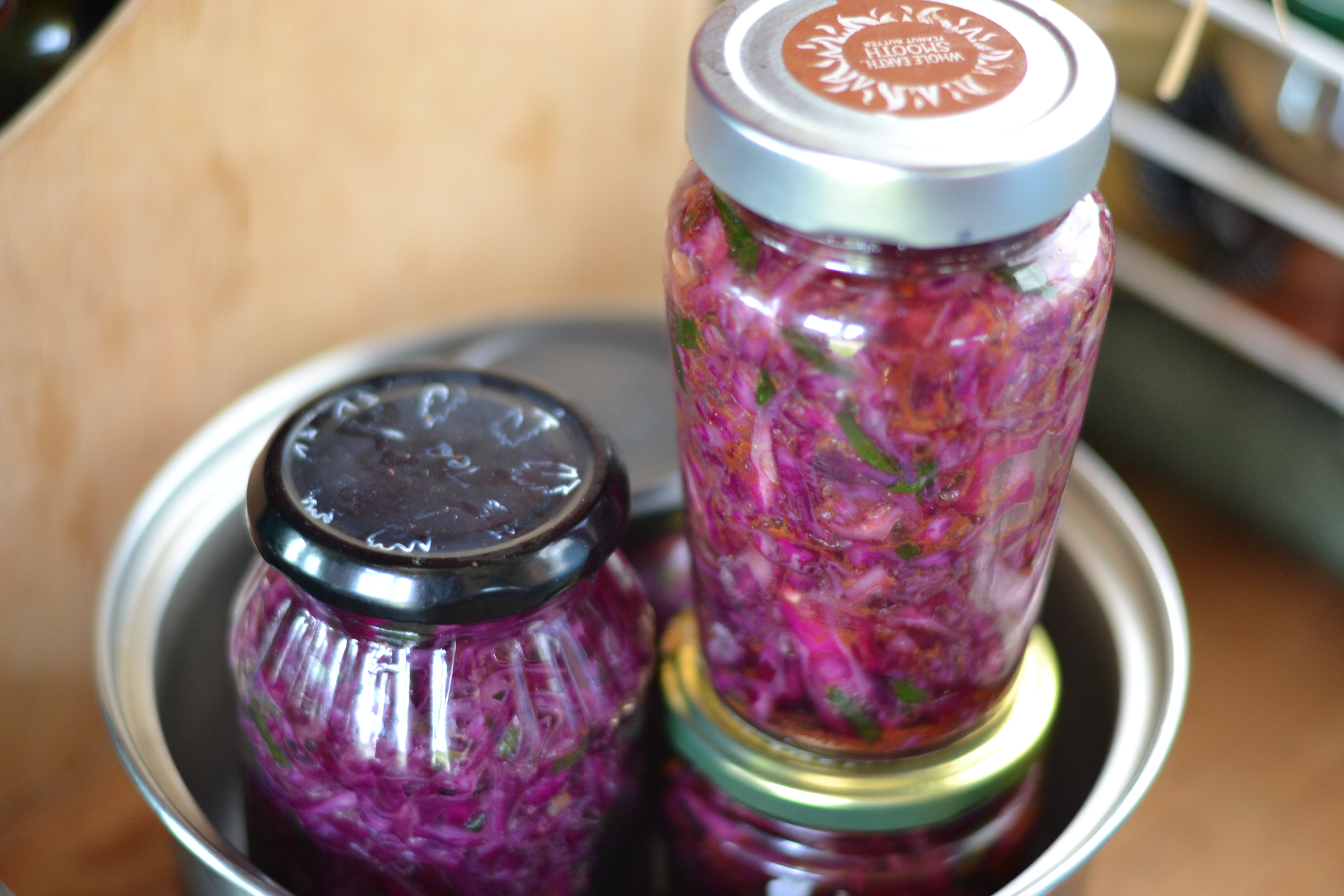
I’ve also been making red cabbage kraut-chi this week, with various ingredients foraged and gifted to me on my travels. I’ve tried a couple of recipes, one with smoked paprika, chilli flakes and chives from Glentrool community garden, and another with herbs from friends’ gardens- winter savoury and oregano. I also hand squeezed a couple of plums into each batch because some recipes call for apple juice or pear juice, but I decided to use what I had to hand. The reality of storing fermented food in a small, intimate space is that you do get some interesting smells emanating from the jars, and occasionally the sounds of the fizzing ferments can take you by surprise when you’re lying in bed! But it’s worth it to eat something that feels so alive and nourishing.

To subscribe and receive updates when I publish new posts, please add your email below: