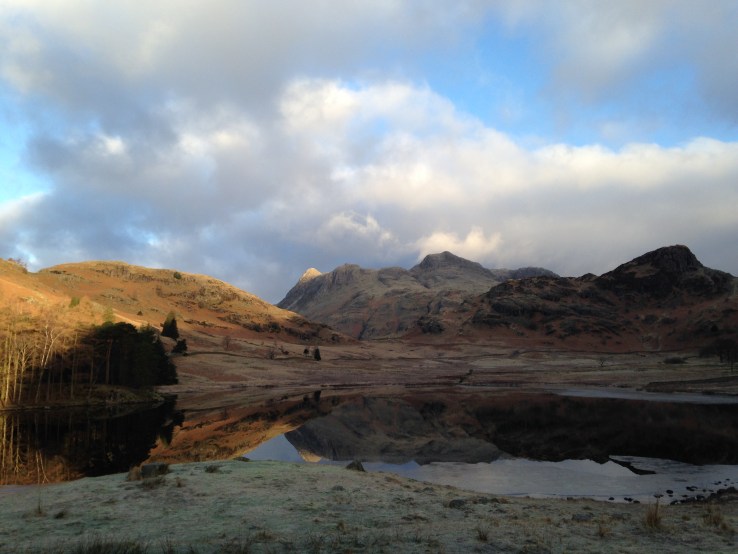
My relationship with spinning began when I was walking near Gurnal Dubs, one of my favourite lesser-known spots in the Lake District, in 2017. As I walked, I collected scraps of Herdwick wool that sheep had shed across the fell. I sat down in a sheltered spot, my back leaning against a sun-warmed crag, and I simply began to twist the fibres until they made an unbreakable chunky thread in my fingers.
That summer I travelled with the fleece pieces and when gathering around firesides with friends, with stories being spun and smoke spiralling skyward, I would twist the wool into thin rudimentary rope and wrap it around a sand-smoothed pebble. I still have that first piece of yarn that I made. A reminder of where it began.
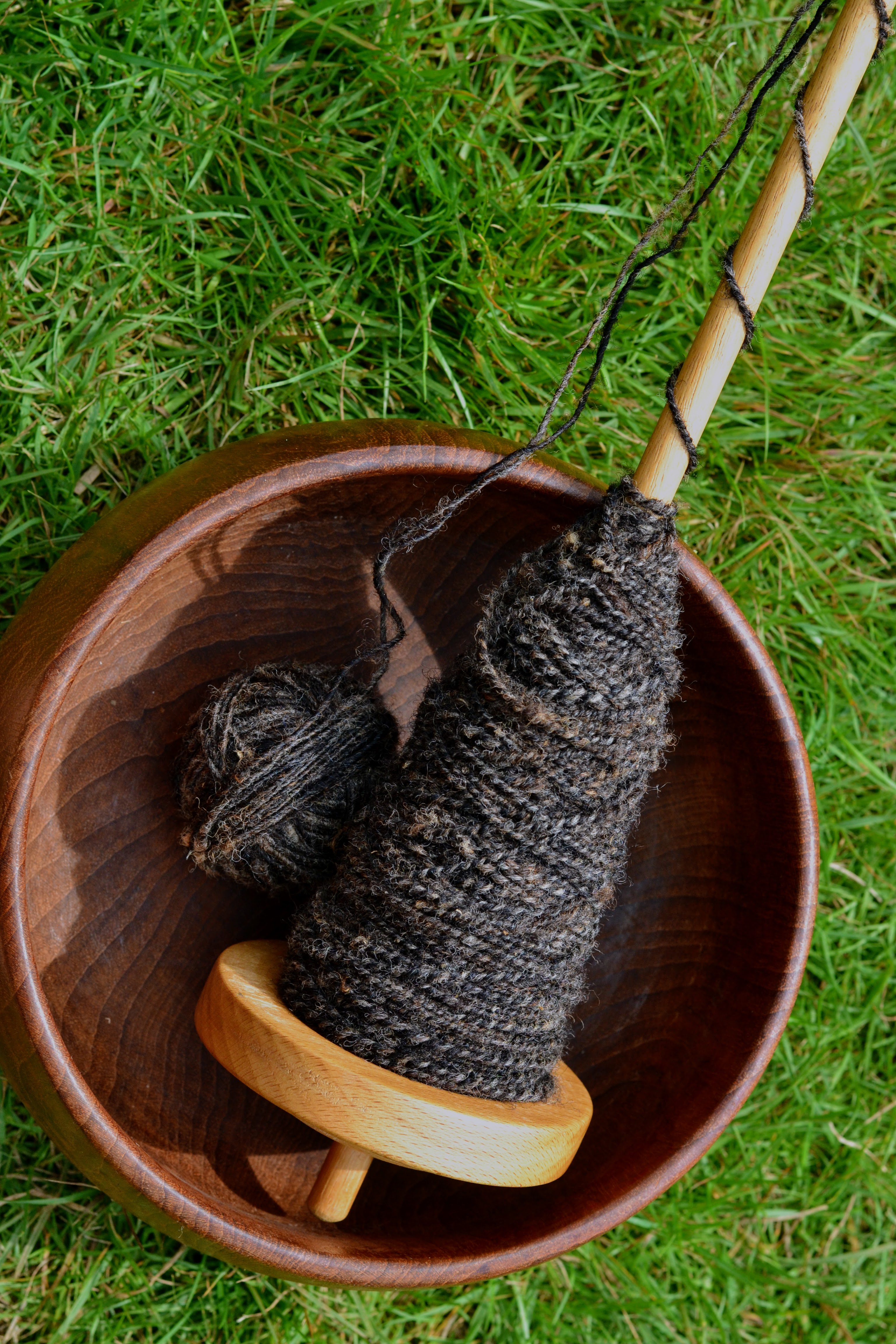
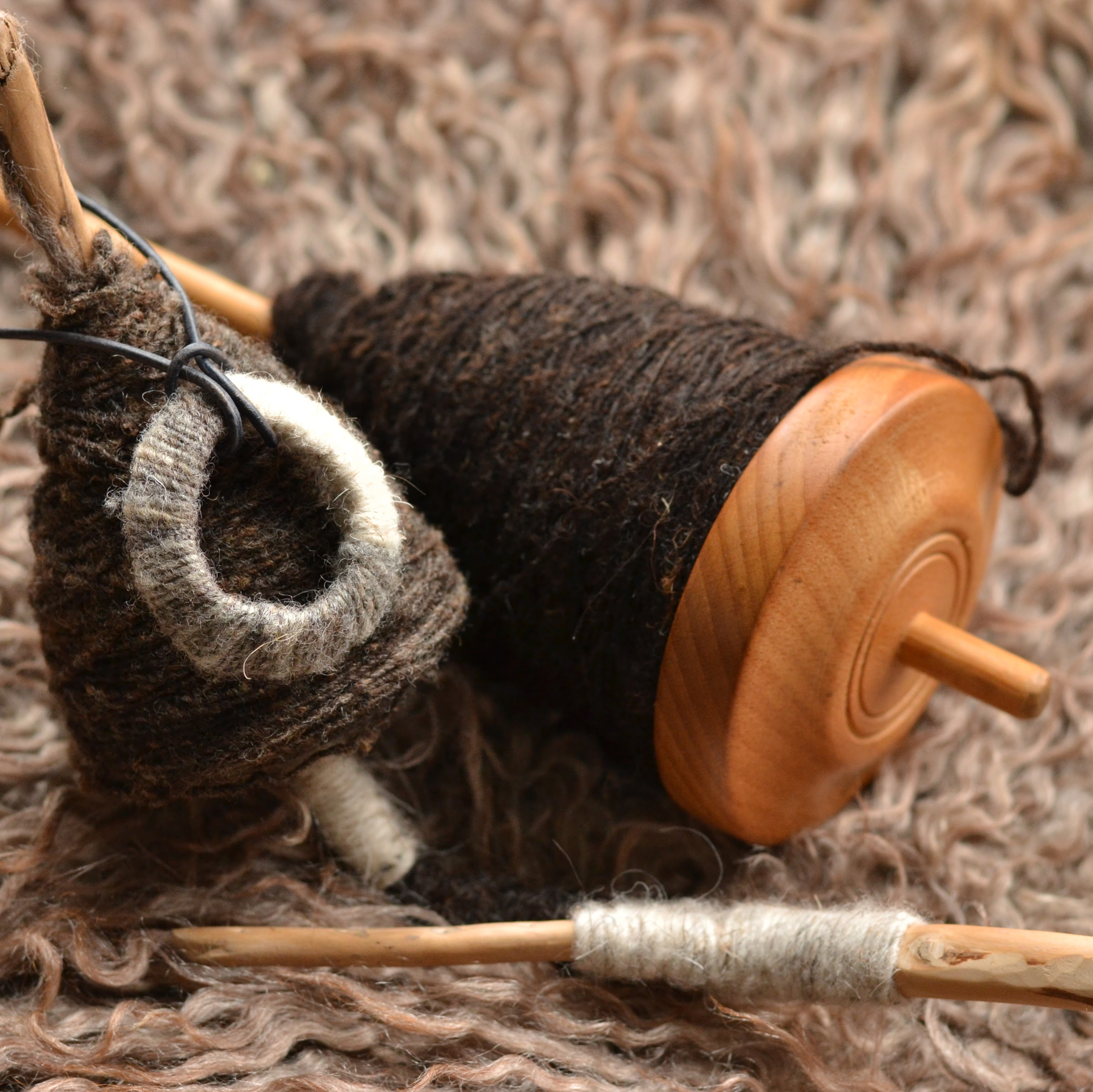
My interest in creating natural fibres stalled after that first experience- I didn’t really have the equipment or knowledge I needed to take it further. But I eventually bought a wooden drop spindle from a community charity shop in Ullapool while I was travelling around the northwest coast of Scotland. I had no idea how to use it and without any fleece on hand, I put the drop spindle away in my craft box under my bed, and waited.
A year earlier, before I found the drop spindle, I met fellow vanner, Lee, and he had told me that his partner, Janet, was an experienced spinner. Janet had written a book about her travels around Scotland on a folding bike- Knit 1 Bike 1: A knitting and cycling tour of Scotland. The encounter with Lee remained with me and when I met him again a year later, having acquired the spindle and some North Ronaldsay rovings (fleece prepared for spinning) on a trip to Orkney, I asked expectantly if Janet was around for a spinning tutorial.
And so it was that Janet and I spent some time by the sea near Whithorn and she taught me some of the basics of spinning with a drop spindle. I learnt so much from that serendipitous interaction and I am so grateful to her for sharing her skills and knowledge with me. I’m also grateful to them both for sharing their low impact life stories with me, further inspiration and encouragement for my own exploration.
Since I learnt the basics, I’ve mainly been allowing my hands and body to intuitively guide me to the next step. I’ve gradually learned to spin and draft simultaneously, a step on from the beginners technique of park and draft. I’ve also been to a spinning group at the Carlbeck Community Centre near Teesdale. Here, the women mainly use spinning wheels but they also have knowledge and experience of using drop spindles as well as weaving, dyeing and preparing fleece for spinning. Their enthusiasm, warmth and gentle guidance has helped me find even more confidence in my spinning.
To me, spinning feels very much like a remembering. I can’t help thinking that, as this is such an ancient skill – remnants of hand spun fibres have been found dating back tens of thousands of years- it is part of us in a deep, primal way. Perhaps our bodies remember how to do it without us necessarily having to learn it at a cognitive level. Given a little bit of guidance, we know what to do.
I also feel that spinning is a practice that I can always learn more about. There are no limits; there are so many different types of natural fibre to work with. Each and every fleece is unique, reflecting the individuality of the sheep (or other animal), the breed and age of the animal, the conditions in which it has lived or been reared, the environment in which it resides. And that’s before even considering plant-based fibres, such as nettle and flax.
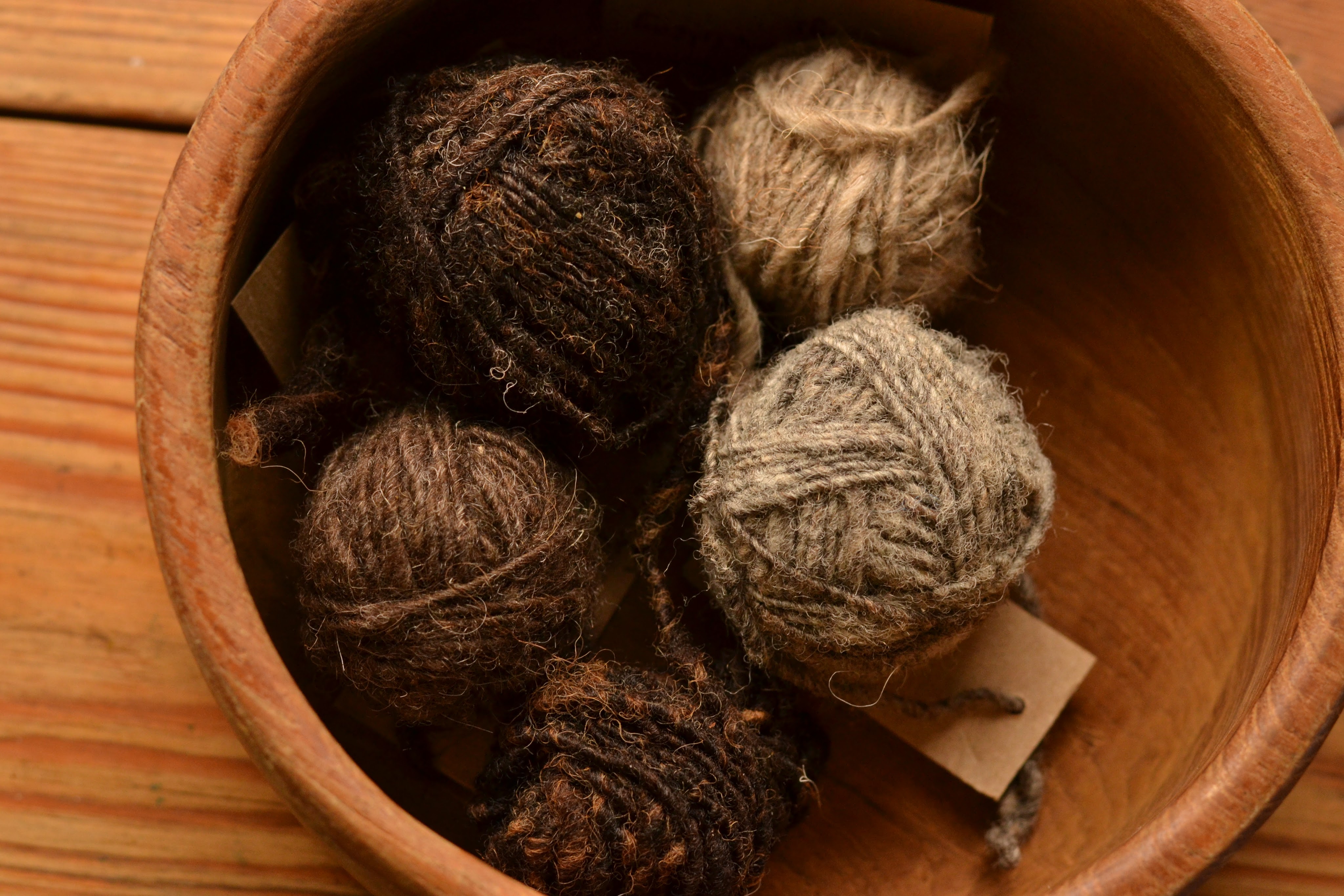
How one prepares the fibre before spinning is also part of the story, and for me is the beginning of the journey. You could say that before preparation there is the relationship with gathering or collecting the fibre, especially if you have your own flock of sheep, or if you grow flax or go foraging for nettles. A flock of my own sheep may be beyond my current possibilities as a van-dweller, but I do love to know where the fleeces I acquire come from. I have been kindly gifted various fleeces recently from friends in the north of England and Dumfries and Galloway and I look forward to getting to know these fibres over the coming months as I process and prepare them for the long winter of spinning by the woodburner.
This journey of learning to spin has in some ways been a journey of unravelling, moving backwards from using a finished product to learning all of the processes which come before that- acquiring the raw material, cleaning the fleece by washing and scouring, preparing the fleece by carding (essentially getting all of the fibres facing roughly in the same direction), and then spinning the clean carded fleece into yarn.
And when you get to the spinning, that feels like the stuff of fairytales. Magic happens when you see the fragile and incoherent fibres begin to turn into something strong, something weight-bearing, something that can then be made into something else. There is so much to be learned at each step of the process that eventually makes the product; the journey is as important as the outcome.
If you are interested in learning how to spin, I highly recommend the book Respect the Spindle: Spin Infinite Yarns with One Amazing Tool, by Abby Franquemont, an interesting, insightful and colourful guide to how to choose a spindle, the different ways to make yarn with spindles, and an overview of the use of spindles in cultures around the world. I would also thoroughly recommend finding a local spinning group or guild to get hands-on guidance.








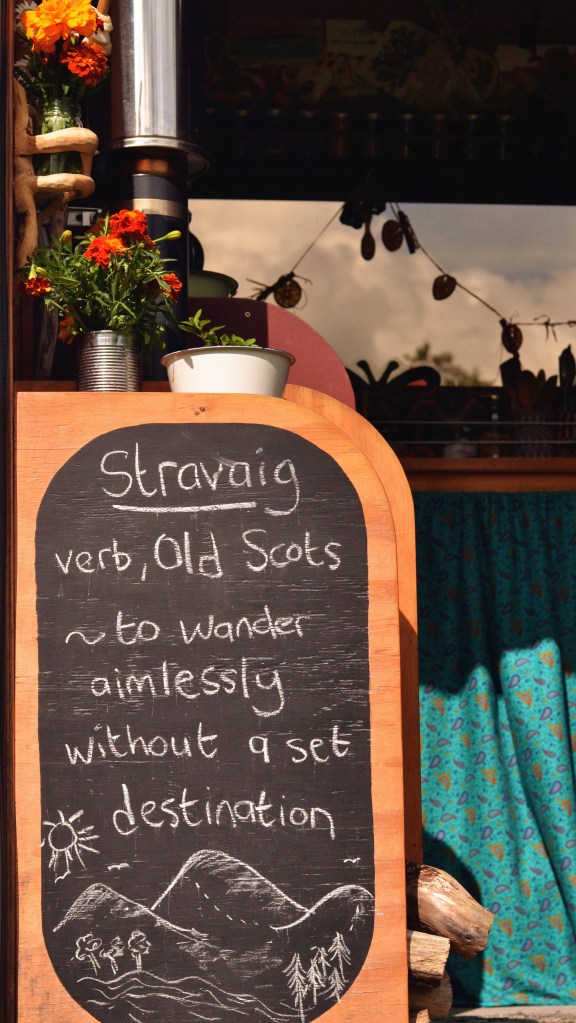
 stravaig